Freeplots
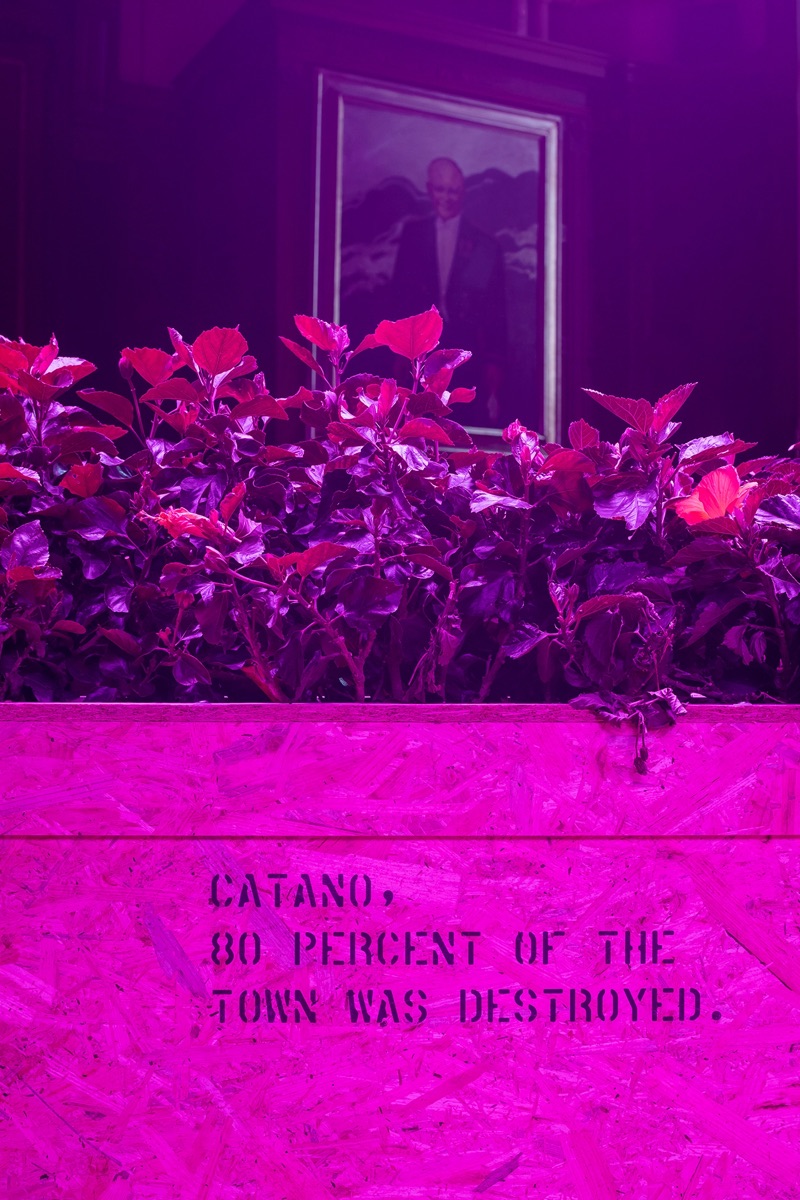
Image source: static-assets.artlogic.net
Freeplots seems a literal response to that proposal for art “from below,” as its primary material is dirt. The project, developed in two other cities prior to Toronto, engaged community groups struggling with crises in housing and public space. Here, Steyerl connected with the city’s Tibetan refugee commu nity, whose members filled wooden planter boxes, shaped like the crates that sequester private art, with culturally important plants such as jasmine, stinging nettle, and marigold.
Jill Glessing, Ciel variable 115, 2020 · read the full text
Freeplots was the artist’s response to finding out, in the aftermath of the 2016 Panama Papers leak, that a collector was storing one of her pieces in a free port (a tax-free storage facility) in Geneva. This revelation was painfully ironic for an artist who has dedicated much of her work to deconstructing and subverting the ways by which art, media and technology are commodified and weaponized to serve the interests of the elite. She calculated the amount she earned from the sale, bought manure-based fertilizers, designed planters shaped like two notorious free ports that house collectors’ duty-free holdings in Geneva and Panama, grew plants in them and displays them as a symbol of the ways communities can resist neo-liberal capitalism and xenophobia.
Gelek Badheytsang, NOW Magazine (Toronto), 29 October 2019 · read the full text
Ostensibly a pair of wooden planters, Steyerl’s Free Plots, are built in the shape of two infamous free ports, one in Geneva and one in Panama. Inside these free plots, stinging nettle, marigold and jasmine grow from manure. As Vlas recounted, Steyerl purchased this manure and financed the project with money she earned selling one of her artworks, which the buyer had promptly stashed in free port storage. Thankfully, Free Plots goes a step beyond equating tax evasion and art hoarding with manure. By collaborating with community gardens to see that the manure is used, Steyerl transforms this by-product of a seriously exclusive use of land into one of the most democratic uses of it, says Vlas. Moreover, she restores something to the public in the place of an artwork lost to private storage.
Maya Burns, Core Magazines, 23 November 2019 · read the full text
Credits
Srinivas Aditya Mopidevi (project coordinator). Jose Reyes and Rosa Reyes (El Cataño Community Garden). Annel Cabrera-Marus, Jessica North, Raziel Reyes, Mya Jenkins and Juan Rodriguez (New York Restoration Project). With contributions from El Cataño Community Garden, East Harlem, Jardin Communautaire de Bonnevoie-Kaltreis and Milky Way Garden, Toronto. Installation design: Manuel Reinartz.