Lovely Andrea
Synopsis
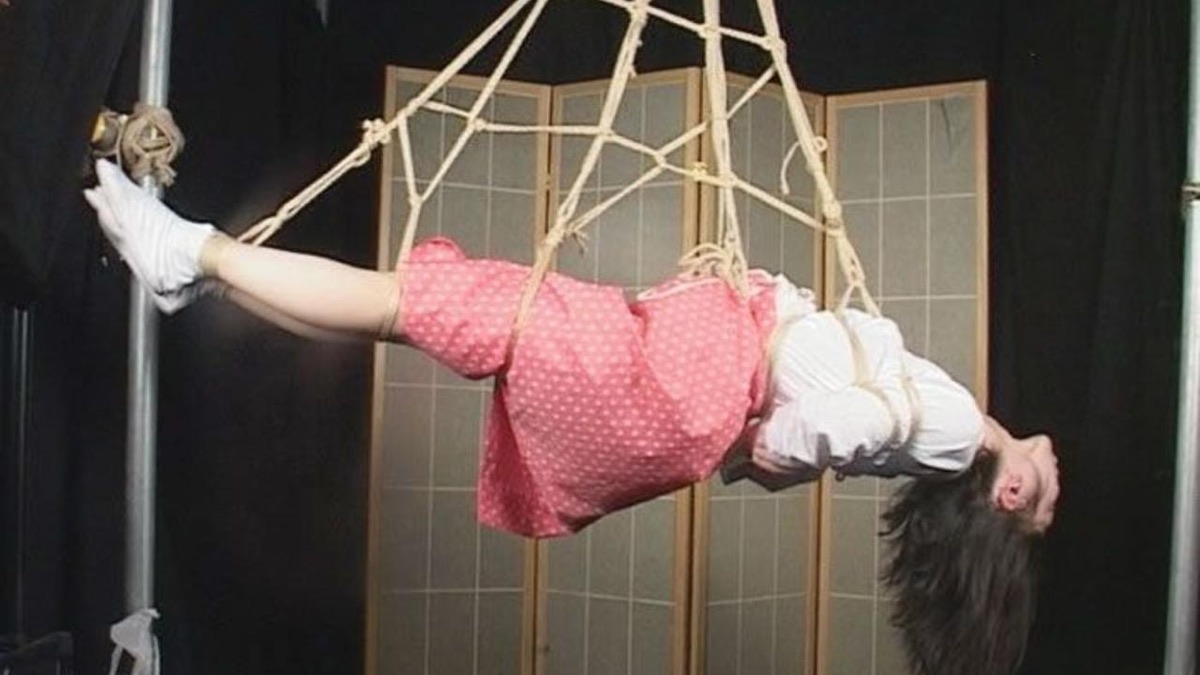
If all pictures became current, in that they pass by and in doing so, are connectable with one another, whether elegantly or obscenely, through translation or associationhow would it be possible to fasten down a picture? Hito Steyerls light-hearted picture translations are about fastening things in an elegant-obscene way: In Tokyo she is looking for a photo series that she posed for in 1987 as a rope bondage model. While making inquiries with experts and authorities in the bondage arts (which are mainly marketed online nowadays), she found what she was looking for in a magazine archive. The cinematic tension is extremely high just now says the translator while Steyerl looks through photos of herself from her days as a film student.
© Hito Steyerl
어원상 유령들의 집회를 의미하는 벤야민의 판타스마고리아 개념은 현대 자본주의 사회에서 이미지가 경험되는 방식을 설명하기 위한 것으로, 역사의 비가시화와 독해 가능성, 몸의 파편화와 재접 합의 가능성과 동시에 관련되는 이미지의 양가적인 측면을 고루 조명한다. 벤야민이 판타스마고리아의 내부에서 현재의 사회적 관계들을 변화시킬 가능성을 찾은 것처럼, 히토 슈타이얼 또한 디지털 이미지가 자본주의적인 논리와 불평등한 권력 관계로부터 자유롭지 않음에 유의하면서도 ‘빈곤한 이미지’의 인용 가능성에 기반한 이미지 정치를 주장한다. 이 글은 발터 벤야민의 판타스마고리아 개념을 경유하여 슈타이얼의 영상 작품 <11월>과 <사랑스러운 안드레아>를 분석함으로써 슈타이얼의 이미지 정치가 이미지와의 동일시를 통해 집단적인 정체성을 형성하기보다는 직접 빈곤한 이미지가 되어 몽타주에 참여하는 방식을 통해 대안적인 사회적 관계가 형성될 가능성을 발견하고자 함을 밝힌다.
trans.The concept of phantasmagoria, which etymologically means an assembly of ghosts, was introduced by Walter Benjamin to explain how images can be involved in the invisibilization and redemption of the past at the same time, or the fragmentization and re-articulation of bodies at the same time in modern capitalist society. As Benjamin found the possibility to change the current social relations inside the phantasmagoria, Hito Steyerl also argues for the politics of images based on the citability of 'poor images' in digital spaces, even if they are linked to capitalist logic and unequal power relations. By analyzing Steyerl's November and Lovely Andrea through the concept of phantasmagoria, this paper contends that Steyerl’s politics of images centers on becoming a poor image and finding unrealized possibilities of building alternative social relations through montage rather than forming a group by identifying with a particular image.김민경 (Kim Min-gyeong), 문화연구 / Cultural Studies 13(1), 한국문화연구학회, April 2025 · in ko · read the full text
The video relays the artist’s hunt for a lost photograph, a sadomasochistic image of Steyerl herself posed in the style of nawa shibari, or Japanese rope bondage. Steyerl had once modeled for extra cash when in film school in Japan in 1987, but twenty years later, without memory of her photographer, agent, or studio, she takes on the formidable task of relocating a single image from the tens of thousands made that year and disseminated in hundreds of publications each month (the enormity of this image pool, in print as well as online, is repeatedly stressed). Steyerl’s quest takes her to various locations in Tokyo with her translator and cameraman in tow; documentary passages and interviews with participants from the expedition are interspersed with appropriations from old cartoons and pop music videos, giving us glimpses of scantily clad women tied in a variety of elegant and vulnerable poses.
T. J. Demos, Artforum, 2008-06 · read the full text
Included is Lovely Andrea, 2007, Steyerl’s thirty-minute tale of her journey through Tokyo’s pornographic publishing industry in search of the single photo spread taken of the artist in 1987 as a nawa shibari bondage model. Produced for Documenta 12, this work benefits from being paired with In/Dependence, 2008, a six-minute film split between two screens that features only close-up shots of Steyerl’s guide in Lovely Andrea, dressed in athletic attire and moving against a black background while hanging from ropes. Her graceful acrobatics while twisting and twining complement the concepts of freedom and bondage, which Steyerl offers, sometimes too didactically, in Lovely Andrea.
Ana Finel Honigman, Artforum (Critics' Picks), September–October 2009 · read the full text
Steyerl’s video Lovely Andrea (2007) further explores this transition from the setting up of a self-critical author to its disappearance behind his or her image, and does so by chronicling Steyerl’s quest to locate a bondage picture of herself that was taken when she was a student in Japan in the late 1980s. The video is formally similar to November, in its combination of filmed footage and popular found material, although this time the exercise in self-reflection doesn’t rely on Steyerl’s voiceover but is dispersed via other voices, making the disappearance of the author within the work more explicit. Further, the protagonist of the video is arguably not Steyerl but Asagi Ageha, an assistant to Steyerl in the work, the simultaneous translator in her interviews and herself a self-suspension (bondage) performer.
Pablo Lafuente, Afterall: A Journal of Art, Context and Enquiry 19, 64–70, Autumn 2008 · read the full text
Credits
Germany/Japan 2007, 30 min, DV. Director: Hito Steyerl. Performer and assistant director: Asagi Ageha. Producer: Osada Steve. Editor: Stefan Landorf. Supported by Matthias J. Grimme, Sylvia Schedelbauer and many others. Sponsored by documenta 12. — documenta 12 press images: installation views, photos Julia Zimmermann, © Hito Steyerl.